Insulation and a complete air seal in one application. Closed-cell foam delivers about R-6 to R-6.5 per inch and shuts down the drafts responsible for up to 40% of a home’s heat loss, built for Edmonton’s -40°C winters.
Free on-site quote · Owner oversees every job · BBB A-rated & insured
Unlike fiberglass batts, spray foam is both a thermal barrier and a complete air seal in one pass. That combination can shut down the air leakage behind up to 40% of a home’s heat loss, straight off your heating bill.
Edmonton winters regularly dip to -30°C and below, which makes insulation one of the most valuable investments a homeowner or building manager can make. Spray foam is the strongest option for Alberta’s climate: where fiberglass only slows heat transfer, spray foam creates a high-performance thermal barrier and a complete air seal in a single application.
We apply polyurethane foam products across Edmonton every working day. The same material knowledge that lifts and levels concrete slabs carries straight into precision spray foam: full adhesion, consistent density, and results that hold through decades of Alberta freeze-thaw. Whether you want open-cell foam for interior sound control or closed-cell for maximum R-value and moisture resistance, we’ll help you pick the right product for the job and the budget.
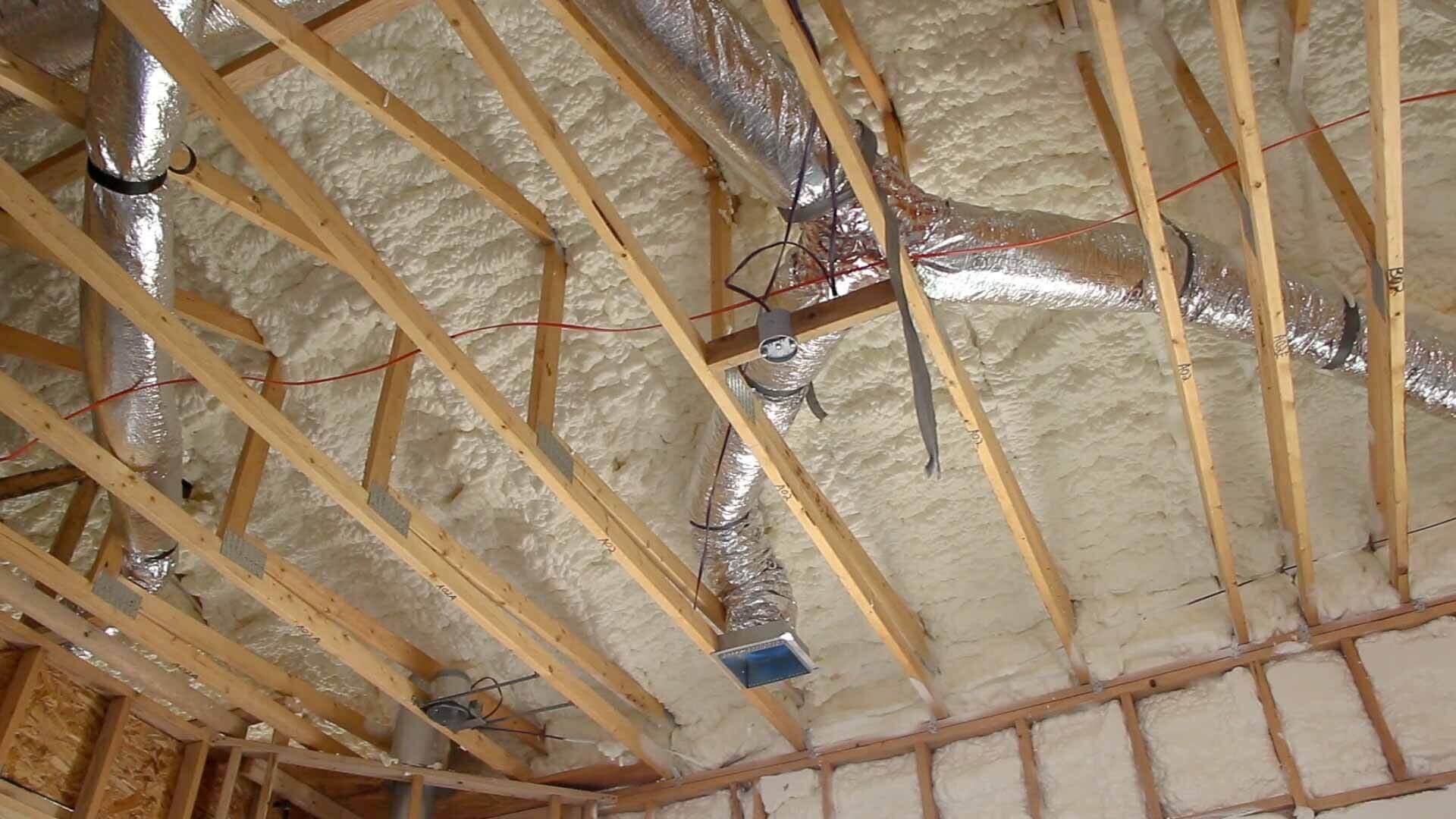
Our climate throws problems at a building envelope that fiberglass struggles with:
For Edmonton’s -40°C winters, closed-cell foam’s higher R-value and moisture resistance make it the smart long-term pick for most exterior applications. We’ll tell you where open-cell makes sense too.
The biggest source of heat loss in most homes. We can spray the attic floor or the roof deck for a conditioned attic.
Typical R-50 to R-60Cold, moisture-prone concrete walls. Closed-cell insulates and creates a vapour barrier, killing the musty smell.
Typical R-20 to R-24Notoriously hard to insulate with batts. Foam fills every gap and corner, closing a major draft source.
Typical R-14 to R-21Cold floors above crawl spaces make a home uncomfortable. We seal and insulate for a warm, dry foundation.
Typical R-20 to R-28Attached garages share walls with the house. Insulating them cuts heat loss and makes the space usable year-round.
Typical R-14 to R-24New construction or existing walls, spray foam outperforms fiberglass batts on both R-value and air sealing.
Typical R-20 to R-28Alberta homeowners may qualify for rebates on insulation and air-sealing upgrades. Programs open and close often (the federal Greener Homes Grant closed in 2025), so it’s worth checking what’s current before you commit. We can help you see what you qualify for and provide the documentation your application needs.
It’s priced by the board foot (one square foot at one inch thick), so the total depends on the area and thickness the job needs. Closed-cell costs more than open-cell, and both cost more up front than fiberglass, but the combined insulation and air-sealing performance typically cuts heating costs, so the upgrade pays for itself over time. The only way to get an accurate number is a look at the space, so call for a free, no-obligation quote on your specific project.
Closed-cell delivers about R-6 to R-6.5 per inch, nearly double fiberglass at about R-3.2. At 3.5 inches that’s roughly R-22, in a much thinner profile than the fiberglass batts you’d need for the same value. For attics we apply thicker layers to reach R-50 or more.
Most residential jobs are done in a single day. A typical attic or basement runs 3 to 6 hours depending on size and complexity. The foam cures within minutes, and the space is fully usable within 24 hours.
Yes. Once fully cured, within 24 hours, spray foam is inert, odourless, and non-toxic. Modern foams use low-GWP blowing agents. During application we follow strict safety protocols and keep the area properly ventilated.
It’s permanent. Where fiberglass sags over 15 to 20 years and blown-in cellulose settles 20 percent or more, spray foam holds its R-value and air seal for the life of the building.
Often, yes, in attics we can go over existing fiberglass or cellulose. For walls and enclosed spaces we usually recommend removing the old insulation first so the foam adheres properly and seals fully. We’ll assess your situation during the free inspection.
Edmonton · St. Albert · Sherwood Park · Spruce Grove · Leduc · Fort Saskatchewan · Beaumont · Stony Plain · Devon
Licensed and insured to work anywhere in Alberta.